THE VIRTUOSITY CODE
3 Steps to Total Piano Freedom & Mastery
By Tatiana Kuzmina, Founder of the International Online Piano Academy
The Russian Legacy, Evolved
My methodology is rooted in the elite traditions of the Russian Piano School, but
over 20 years of teaching, I have evolved these foundations into a proprietary system.
Having taught at the Gnessin Russian Academy of Music, I realized that true virtuosity
is not about mechanical skill, but about a radical shift in physical sensation.
Beyond the Technical Ceiling
I don’t just teach "technique" — I teach a state of total freedom where effort
and tension simply cease to exist. When your internal sensations change, the
"technical ceiling" disappears. My method allows you to reach any tempo and
tackle any complexity because the piano stops being an obstacle and becomes
an extension of your own body.
31 Years of Mastery
Three decades at the piano — and more than twenty years of teaching — have shaped
my approach. Whether you are a beginner or a professional, my mission as the founder of the International Online Piano Academy is to help you "rewire" your playing. By synthesizing classical mastery with modern biomechanics, I help pianists worldwide discover a level of virtuosity that
feels as natural and effortless as breathing.
The Russian Legacy, Evolved
My methodology is rooted in the elite traditions of the Russian Piano School, but over 20 years of teaching, I have evolved these foundations into a proprietary system. Having taught at the Gnessin Russian Academy of Music, I realized that true virtuosity is not about mechanical skill, but about a radical shift in physical sensation.
Beyond the Technical Ceiling
I don’t just teach "technique" — I teach a state of total freedom where effort and tension simply cease to exist. When your internal sensations change, the "technical ceiling" disappears. My method allows you to reach any tempo and tackle any complexity because the piano stops being an obstacle and becomes an extension of your own body.
31 Years of Mastery
Three decades at the piano — and more than twenty years of teaching — have shaped my approach. Whether you are a beginner or a professional, my mission as the founder of the International Online Piano Academy is to help you "rewire" your playing. By synthesizing classical mastery with modern biomechanics, I help pianists worldwide discover a level of virtuosity that feels as natural and effortless as breathing.
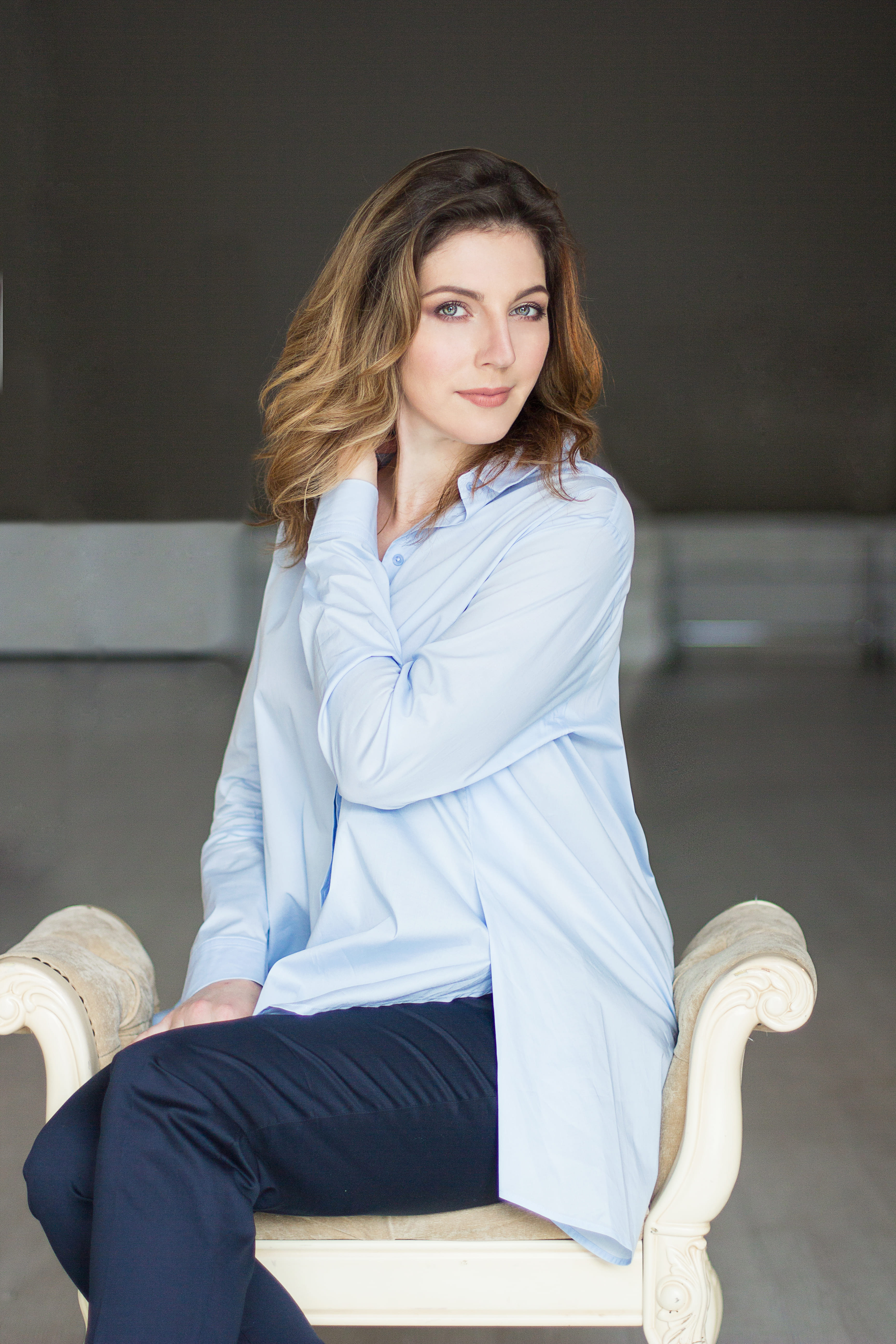
“The Art of Free Virtuosity in Action” — Coda from Ballade No. 4 in F minor, Op. 52

The Three Pillars of My Method
I believe that virtuosity is not a hidden talent, but a precise technology. My "Freedom of Virtuosity" system focuses on three fundamental pillars that transform how you interact with the instrument:
Pillar 1 — The Gravity Principle: The Weight of Freedom
“The weight of the arm is not merely physical heaviness; it is a living flow of energy that depends on a multitude of factors. To master it, you must find the perfect balance between your body, your technique, and your inner state.”
The Elements of Free Weight
Your ability to produce a deep, singing tone without fatigue depends on four key elements:
- Hand Architecture (Positioning): A proper "frame" that conducts weight precisely into the fingertip. If the positioning is incorrect, the weight gets "stuck" in locked joints.
- Wrist Fluidity (Momentum Transfer): The skill of transferring weight from one note to the next smoothly, like a chain. This liberates the hand and brings effortless ease to fast passages.
- Body Awareness (Connection): The ability to detect tension throughout the entire body—from shoulders to back—and release it instantly. A free arm begins with the balance of the whole torso.
- Psychology (Mental State): Your thoughts directly govern your body. Stage fright or over-effort can make the arm lose its weight and become tense. Mastery is the ability to remain free within, even under pressure.
Hand Architecture — The Bridge for Gravity
The Conductive Frame
"No matter how heavy or relaxed your arm feels, its weight cannot reach the keys if the architecture of your hand is broken. Incorrect positioning forces the wrist to lock as a compensation, instantly stopping the natural flow of gravity."
Check Your Hands
While there are many nuances to a correct posture, these three common errors are the most frequent barriers to speed. Look at your hands right now — do you recognize one of them?
Common Barriers: 3 Key Errors
The Collapsed Dome
- The Issue: When the palm loses its natural arch, the internal support vanishes.
- The Result: The weight "leaks" through the palm and never reaches the fingertip, making your sound thin and weak.

The Frozen 1st Finger & The Locked Wrist
- The Issue: Tension in the 1st finger creates a physical anchor that tightens the entire wrist.
- The Result: A stiff wrist acts like a dam, blocking the weight from flowing freely from your body into the instrument.
The Hooked 5th Finger
- The Issue: Curling the 5th finger tightly instead of using it as a stable pillar of support.
- The Result: This creates deep tension along the outer edge of the hand, destroying the balance of your weight and leading to rapid fatigue.
The Art of Motion — Wrist Fluidity
The Universal Keys to Virtuosity
"There are only two fundamental wrist motions that serve as the foundation for every piano technique. Master these, and you master the instrument."
The Two Essential Motions
These primary movements are identical for both hands but mirrored in direction. They are the "parents" of all techniques—from scales to complex virtuoso passages.- The Circular Flow: The wrist travels in a soft, downward arc.
- Right hand: Move down and outward to the right.
- The Adaptation Principle: All other movements are simply adaptations of these two. By adjusting amplitude and speed, you play through the natural inertia of your wrist, eliminating the need for "brute force".
The Result: Free Virtuosity. You no longer play with your fingers; you play through them using the full weight of your arm.
The Master’s Test — Mind-Body Connection
"The greatest enemy of freedom is the fear of the wrong note.
This mental barrier creates 'invisible locks' in your muscles before you even touch the keys."
The Paradox of Weight: Freedom vs. Structure
The biggest challenge for most pianists is combining a heavy, completely relaxed arm with a stable hand position. If your hand goes completely limp, it flattens like a pancake upon impact, and the weight leaks. True mastery requires a paradox: an entirely free arm supported by a firm, arched finger structure.
Practice: The "Free Fall" Exercise
This exercise restores the connection between your mind, your body, and the instrument.
- The Knee Drop: Lift your arm and let it fall onto your knee like "dead weight." Feel the heavy, total relaxation in your shoulder and elbow. This is your reference point for true gravity.
- The Keyboard Transfer: Approach the piano with that exact same sensation. "Drop" your hand into the key without any mental preparation or tension in the air.
- The Active Landing (Preserving the Arch): The moment your hand falls, the fingertip must land firmly and securely on the key. The arch of the hand (the dome) must keep its structural shape and never collapse, while the wrist remains completely relaxed and flexible, absorbing the impact by naturally dropping slightly downward.
- The Body Scan: If your hand flattens, you lack structure. If you feel a "jerk" or a "lock" in your wrist or elbow, you are using brute force instead of gravity.
Pillar 2 — Active Fingers & Precision Articulation
The Secret of Speed: Articulation vs. Lifting
In my methodology, we distinguish between two completely different concepts: high finger lifting and precise articulation. High, strained finger lifting is the ultimate enemy of speed. To achieve true virtuosity, your fingers must stay close to the keys. Speed is not born from high-amplitude theatrical movements, but from active, independent fingertips and precise nervous system commands.
The Finger Separation Exercise (The "Lazy Hand" Technique)
This exercise is designed to separate the movement of each individual finger from the rest of the hand's muscles, first on a flat surface and then on the keyboard.
● The Flat Surface Position: Place your hand completely flat and relaxed on a table or the piano fallboard. Your wrist must rest calmly without any hidden tension.
● The Action: Slightly lift one single finger from the knuckle joint. Do not aim for maximum height; focus purely on isolation.
● The Self-Scan: Look closely at your hand. If your wrist tightens, or if the adjacent fingers twitch and lift along with it, you are engaging unnecessary muscles. This is exactly how a technical "lock" is created.
● The Keyboard Transfer: Try the exact same movement on the keys. Lift and drop the finger while ensuring the wrist remains completely soft and fluid, and the other fingers stay resting and relaxed.
Rhythmic Mastery with Continuous Weight
Many students practice rhythmic variants (dotted rhythms, triplets) to build technique, but they make a fatal mistake: they play superficially, losing the arm weight from Pillar 1 and locking the wrist.
The Rule: Every rhythmic exercise must be performed while maintaining the continuous "heavy arm" feeling.
The Flow: Your fingers articulate the shifting rhythm, but your wrist allows the weight to flow smoothly from note to note without getting stuck. We never use the fingers in isolation from the body's weight; they are simply the precise conductors where gravity meets the key.
Visualizing Precision: To play fast, your fingers must act like independent, precise triggers that instantly deliver the weight, while your arm remains a completely relaxed, heavy pendulum.
Pillar 3 — Speed of Thought & Internal Hearing
The Anatomy of Mental Tension
Physical tension is rarely caused by muscular weakness. It is a protective reaction of your nervous system. Most often, hands lock up because the fingers run ahead of thought. When your fingers move faster than your brain can process the information, they literally "don't know where to run next," and the wrist instantly blocks to prevent a mistake.
You can only play freely at the exact tempo at which you can vividly and clearly hear the music inside your head. If your brain lags even a millisecond behind your physical movement, stiffness is inevitable. Speed is entirely dictated by the clarity of your mental signal.
The Tool: Vocalization & Neural Maps
The ultimate test of true mastery is simple — you can only play as fast as you can mentally "speak" the notes. To build a clear internal map before you play, use vocalization:- The Rule of Simplification: Sing or say the note names out loud in tempo. Skip all sharps and flats (just say Do, Re, Mi... or C, D, E...). Your tongue cannot outrun a fast tempo if you overcomplicate the words with accidentals.
- The Connection: If your tongue trips or hesitates while naming the notes during a pause, your fingers will inevitably trip on the keys. Vocalization bridges the gap between your internal ear and your physical fingertips.